Somewhere there is a document with your name in it. It says that when someone you love can no longer manage their own affairs, you are the one who steps in. If that moment has arrived, this book is the plan: what to do, in what order, across the first sixty days, so nothing urgent falls through the cracks and nothing irreversible happens by accident.
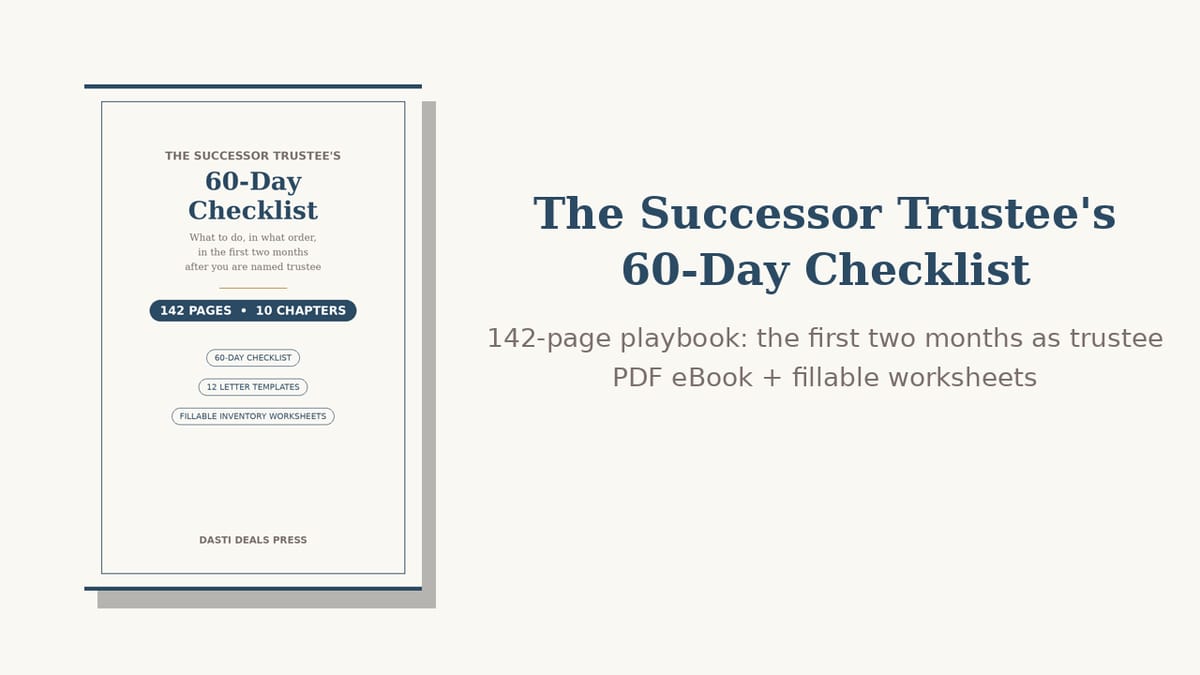
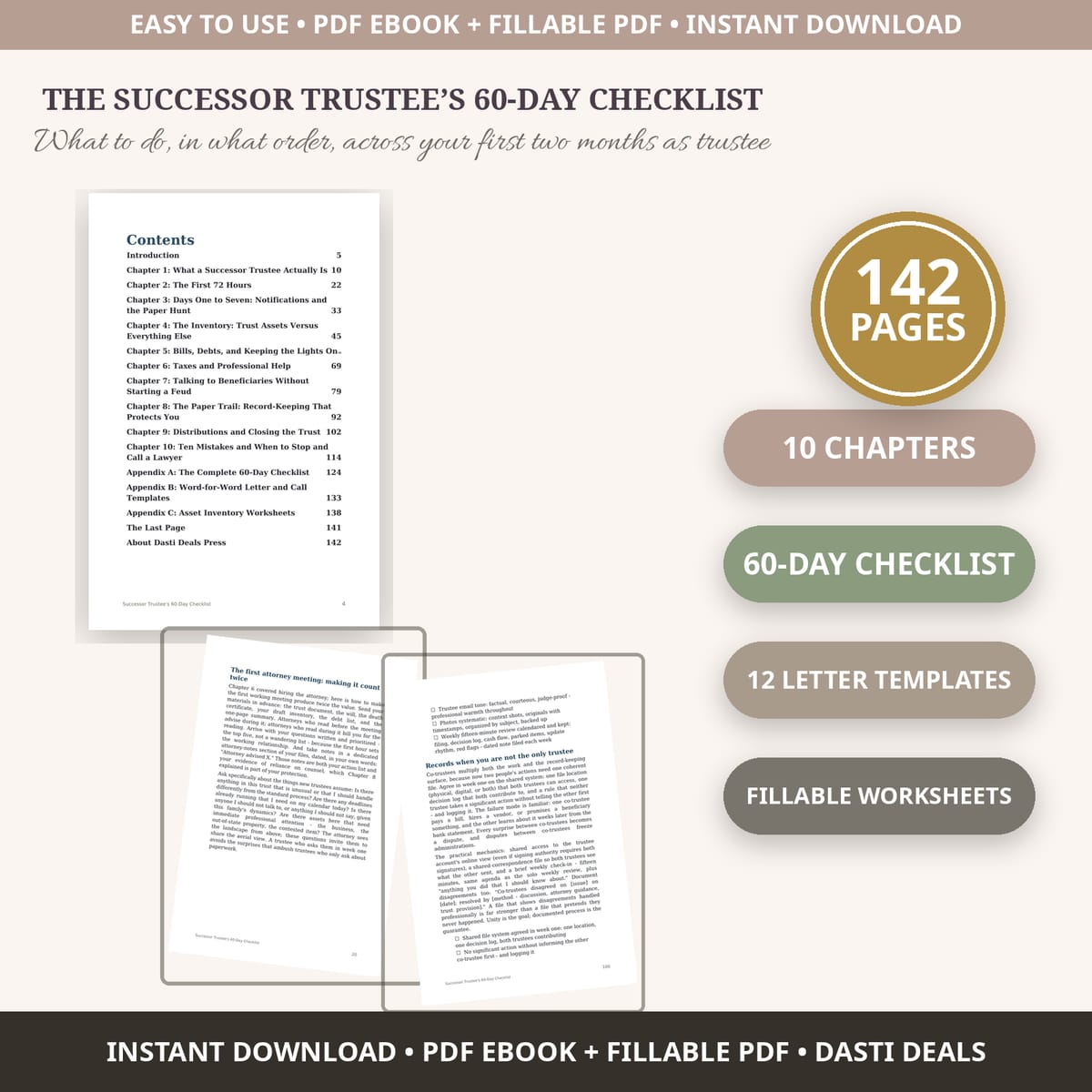
This 142-page playbook (36,176 words) is written for the layperson named successor trustee of a family living trust. Ten chapters walk the full sequence — secure, notify, inventory, pay, file, communicate, record, distribute, close — plus three appendices: the complete 60-day checklist day by day, 12 word-for-word letter and call templates, and asset inventory worksheets. A separate 7-page FILLABLE worksheets PDF (335 fillable fields) is included so you can work the checklists, inventory, and logs on screen. Every chapter ends with a "Trustee Move" — one concrete action for that week.
10 CHAPTERS:
WHAT A SUCCESSOR TRUSTEE ACTUALLY IS — the fiduciary role in plain language; what you must do, may do, and must never do; death vs. incapacity; the professional mindset.
THE FIRST 72 HOURS — securing the house, pets, mail, car, and valuables; the three phone calls; what NOT to do in the first days.
DAYS ONE TO SEVEN: NOTIFICATIONS AND THE PAPER HUNT — death certificates; the three waves of notifications; the room-by-room paper hunt; digital accounts; the master contact list.
THE INVENTORY: TRUST ASSETS VERSUS EVERY ELSE — the five buckets; valuing without overpaying; the worksheet system in three passes; the debt inventory; the personal property problem.
BILLS, DEBTS, AND KEEPING THE LIGHTS ON — the trustee account; the four-pile triage; autopay archaeology; the mortgage; medical bills; collectors; sixty-day cash flow.
TAXES AND PROFESSIONAL HELP — the tax landscape (educational overview); hiring the estate attorney and the CPA; the records they need; working with professionals without wasting money.
TALKING TO BENEFICIARIES WITHOUT STARTING A FEUD — the first letter; the update rhythm; what to say about money; hard conversations; requests and the word no.
THE PAPER TRAIL: RECORD-KEEPING THAT PROTECTS YOU — the eight-folder system; the decision log; receipts, mileage, and time; the accounting beneficiaries will see.
DISTRIBUTIONS AND CLOSING THE TRUST — the sequence that must come first; reading distribution provisions; transparent math; reserves; receipts, releases, and closing formalities.
TEN MISTAKES AND WHEN TO STOP AND CALL A LAWYER — the ten errors that hurt trustees; the red flags that mean counsel now; the honorable resignation option; five scenario drills.
PLUS 3 APPENDICES: A) The complete 60-day checklist, day by day; B) 12 word-for-word letter and call templates (beneficiaries, banks, insurers, Social Security, employers, creditors, collectors); C) Asset inventory worksheets with the privacy-by-design rule (locations and last-4-digits only — never full account numbers or passwords).
DIFFERENT FROM OUR OTHER BOOKS: Product 82 ("The Probate-Proof Family Estate & Living Trust Playbook") is about CREATING the estate plan — living trusts, TOD deeds, beneficiary audits, funding checklists — for the person setting things up. Product 85 ("When I'm Gone" Family Master Binder) is the fill-in master organizer the grantor completes in advance. THIS book is for AFTER: you have been named successor trustee and the sixty-day clock is running — the day-by-day work of carrying out someone else's trust.
IMPORTANT — PLEASE READ:
Educational information only. This book is NOT legal advice, NOT tax advice, and NOT financial advice, and it does not create an attorney-client relationship.
Trust law, probate rules, tax filings, and creditor deadlines vary by state and change over time. Consult a licensed estate attorney in the state where the trust is administered before you sign, pay, distribute, or dispose of anything significant.
Timeframes in this book are the book's own 60-day organizational plan, never legal deadlines. No statutes, filing deadlines stated as universal law, fee figures, tax rates, or statistics are quoted as facts.
The letter templates are organizational starting language, not legal documents — have your attorney review anything you send, sign, or file.
Original content written for this book. No copied text. No testimonials, no guarantees.
What a successor trustee actually is — the fiduciary role in plain language; what you must do, may do, and must never do
The first 72 hours — securing the house, pets, mail, car, and valuables; the three phone calls; what NOT to do in the first days
Days one to seven: notifications and the paper hunt — death certificates, the three waves of notifications, the room-by-room paper hunt, digital accounts, the master contact list
The inventory: trust assets versus everything else — the five buckets, the worksheet system in three passes, the debt inventory
Bills, debts, and keeping the lights on — the trustee account, the four-pile triage, autopay archaeology, the mortgage, medical bills, collectors, sixty-day cash flow
Taxes and professional help — the tax landscape (educational overview), hiring the estate attorney and the CPA, the records they need
Talking to beneficiaries without starting a feud — the first letter, the update rhythm, what to say about money, hard conversations
The paper trail: record-keeping that protects you — the eight-folder system, the decision log, receipts, mileage, and time
Distributions and closing the trust — the sequence that must come first, reading distribution provisions, reserves, receipts, releases, and closing formalities
Ten mistakes and when to stop and call a lawyer — the ten errors that hurt trustees, the red flags that mean counsel now, the honorable resignation option, five scenario drills
3 appendices: A) the complete 60-day checklist, day by day; B) 12 word-for-word letter and call templates (beneficiaries, banks, insurers, Social Security, employers, creditors, collectors); C) asset inventory worksheets with the privacy-by-design rule (locations and last-4-digits only — never full account numbers or passwords)
Successor-Trustees-60-Day-Checklist-Worksheets-Fillable.pdf — 7 pages, 335 fillable fields: work the checklists, inventory, and logs on screen
README-license.txt
Key features
The full 60-day sequence in order → secure, notify, inventory, pay, file, communicate, record, distribute, close
Day-by-day checklist → Appendix A lays out the complete 60 days one day at a time
12 word-for-word templates → letter and call scripts for beneficiaries, banks, insurers, Social Security, employers, creditors, and collectors
Fillable worksheets PDF → 7 pages, 335 fillable fields for the checklists, inventory, and logs
Privacy by design → inventory worksheets record locations and last-4-digits only — never full account numbers or passwords
Record-keeping that protects you → the eight-folder system and decision log from Chapter 8
One action per chapter → every chapter ends with a "Trustee Move," one concrete step for that week
Written for after, not before → distinct from Product 82 (creating the estate plan) and Product 85 (the grantor's fill-in binder): this is the trustee's after-plan
Frequently asked questions
Is this legal, tax, or financial advice?
No — educational information only. It does not create an attorney-client relationship. Consult a licensed estate attorney in the state where the trust is administered before you sign, pay, distribute, or dispose of anything significant.
Are the 60 days legal deadlines?
No — timeframes in this book are the book's own 60-day organizational plan, never legal deadlines. Trust law, probate rules, tax filings, and creditor deadlines vary by state and change over time.
Can I use the letter templates as-is?
They are organizational starting language, not legal documents — have your attorney review anything you send, sign, or file.
Who is this written for?
The layperson named successor trustee of a family living trust — no legal background assumed.
How is this different from your other estate books?
Product 82 is about creating the estate plan; Product 85 is the fill-in master organizer the grantor completes in advance. This book is for after: the sixty-day clock is running and you are carrying out someone else's trust.
Does it ask for sensitive information?
No — the inventory worksheets follow a privacy-by-design rule: locations and last-4-digits only, never full account numbers or passwords.
The Successor Trustee's 60-Day Checklist
A 142-page playbook for the layperson named successor trustee of a family living trust: the full sequence — secure, notify, inventory, pay, file, communicate, record, distribute, close — plus a day-by-day 60-day checklist, 12 word-for-word letter and call templates, and a fillable worksheets PDF.
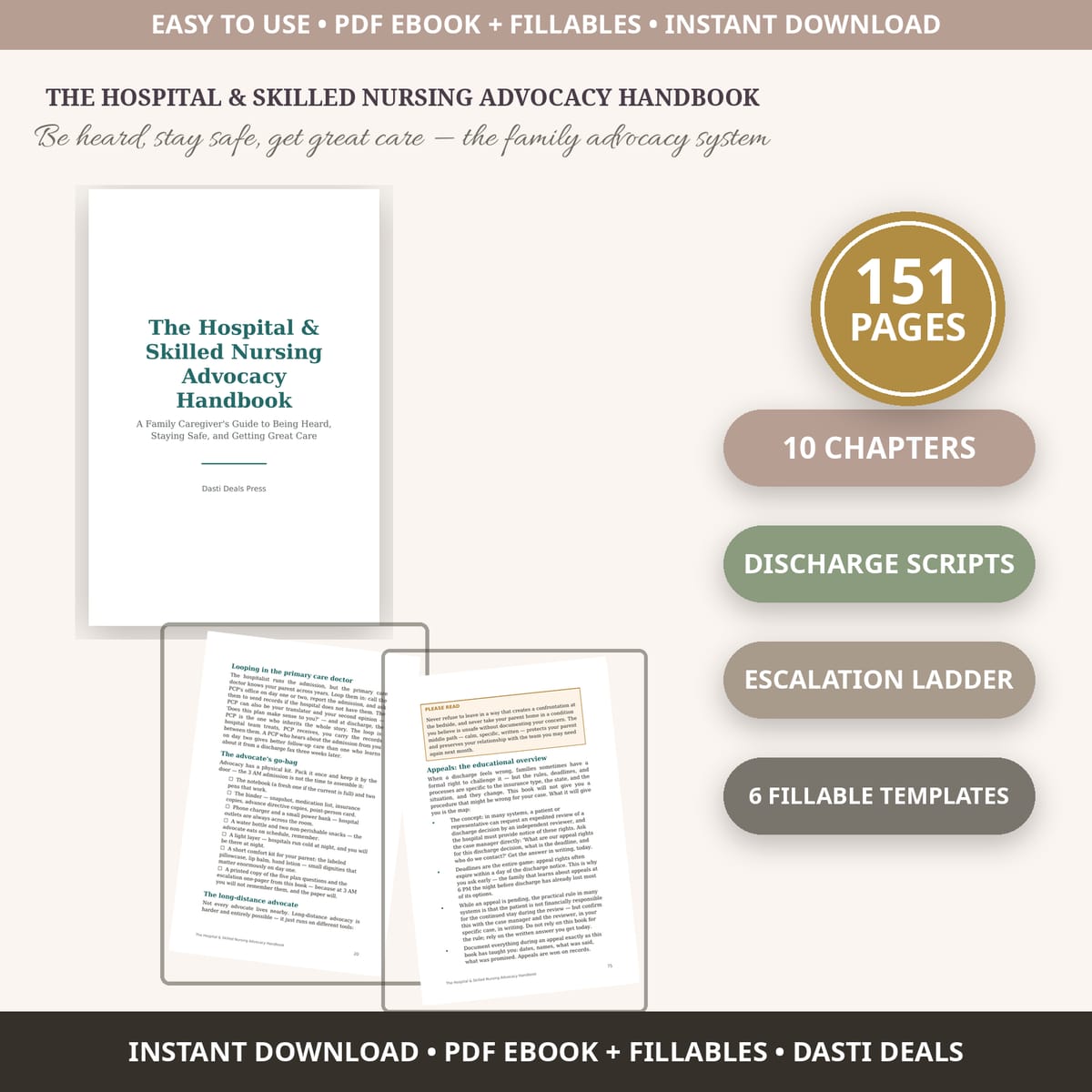
A family caregiver's guide: the 151-page handbook nobody gave you — how the system works, word-for-word scripts for every hard conversation, 6 printable master checklists, and 6 fillable templates for the bedside.
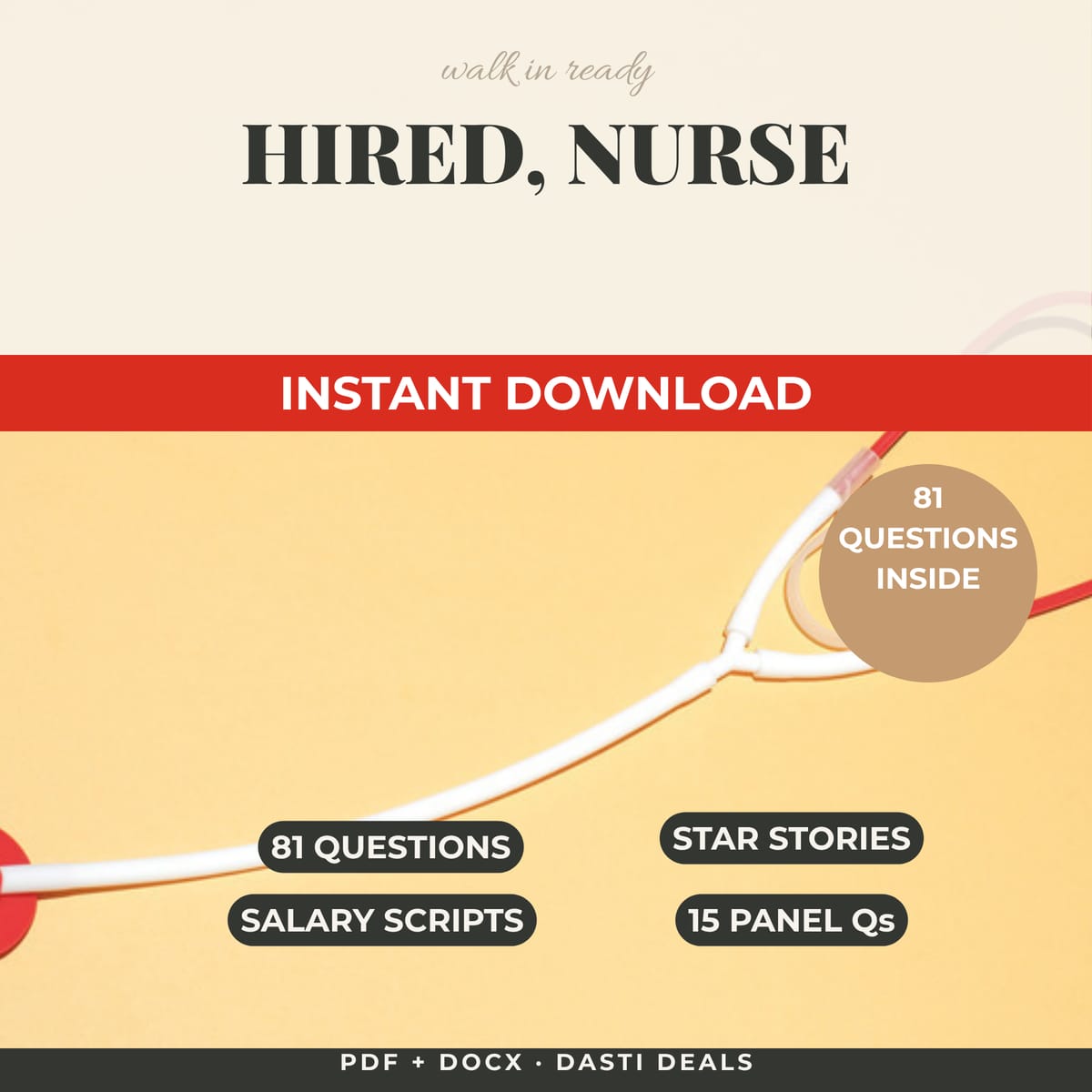
81 RN interview questions with model answers, a STAR story builder, 15 questions to ask the panel, a salary negotiation script, and a resume checklist — everything a new-grad nurse needs to walk in rehearsed.
Stop freezing on live SQL. 40 concept drills with model answers, 30 worked query problems (every solution executed and verified against the included runnable SQLite database), talk-through scripts, and a cheat sheet.