A LOW-SPOON SYSTEM FOR ADHD BRAINS: FEWER DECISIONS, ENERGY-MATCHED MEALS, DINNER WITHOUT DREAD
If meal planning keeps collapsing by Wednesday — the ambitious Sunday plan, the forgotten ingredients, the rotting vegetables, the cereal-for-dinner shame spiral — this book is the system that was actually designed for your brain. Not a diet plan. Not a cookbook of fussy recipes. A complete kitchen operating system built around how ADHD brains really work: variable energy, expensive decisions, time blindness, and sensory intensity.
THE CORE IDEA: your capacity to cook is not constant, so your food system can't be constant either. The low-spoon framework gives you three gears — GREEN days (real cooking), YELLOW days (assembly meals, combined not cooked), RED days (zero-effort food, zero guilt) — and matches the meal to the moment. Every day has a matching standard, and meeting it is a win.
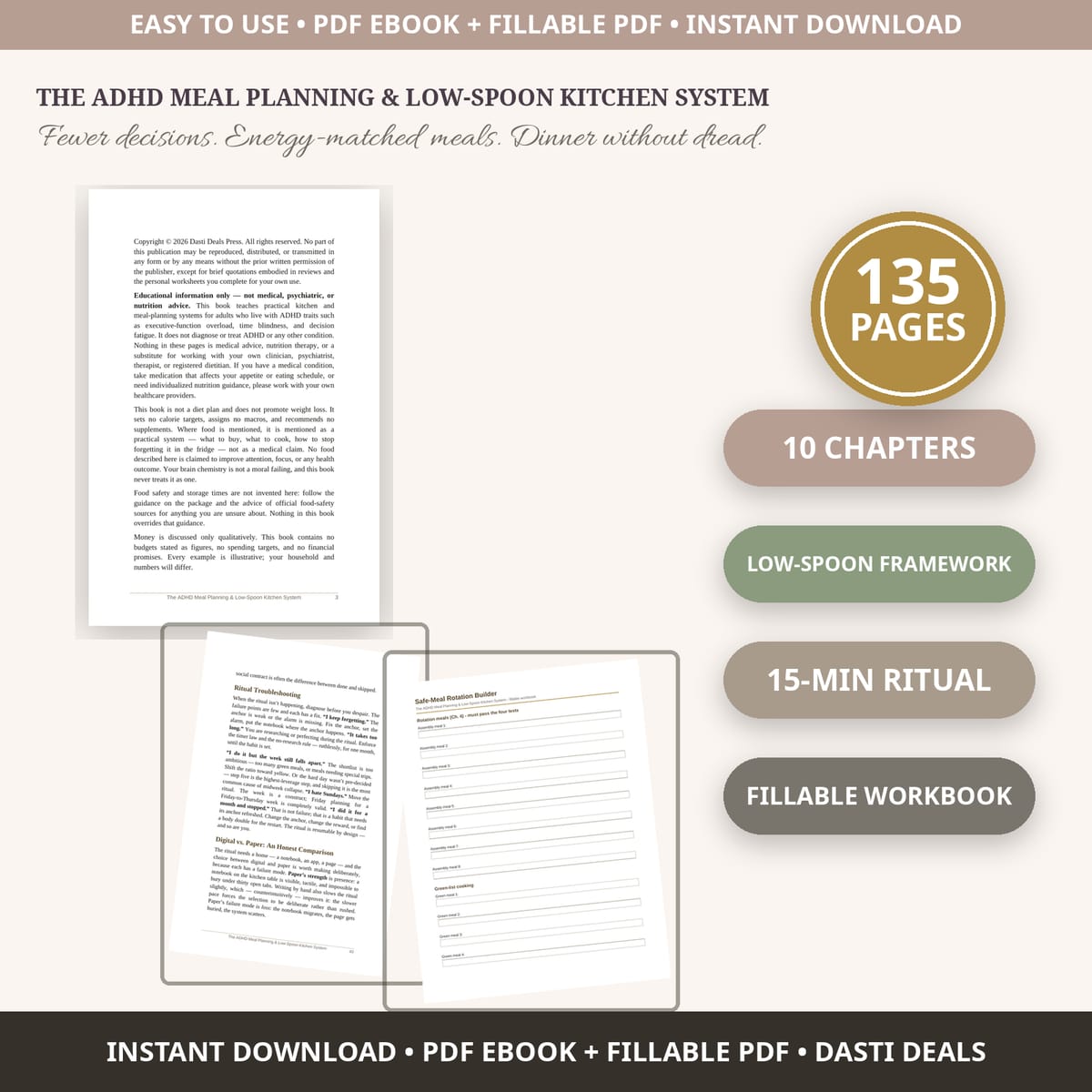
WHAT'S INSIDE (135 pages, 38,208 words — verified)
10 chapters: why meal planning fails ADHD brains, the low-spoon framework, the 15-minute weekly planning ritual, your safe-meal rotation, the two-trip grocery system, the always-stocked pantry backbone, batch cooking without the Sunday marathon, sensory-friendly eating, the forgotten-food problem, and keeping it alive (takeout, households, reset rituals)
5 appendices: low-spoon pantry master list, 15-minute ritual template, safe-meal rotation worksheet, fridge map template, and scripts for the family conversation
"Kitchen Move" action box in every chapter — one concrete step per week
EDUCATIONAL INFORMATION ONLY — NOT MEDICAL, PSYCHIATRIC, OR NUTRITION ADVICE. This book does not diagnose or treat ADHD or any condition. It is not a diet plan, sets no calorie targets, assigns no macros, and recommends no supplements. No food is claimed to improve attention, focus, or any health outcome. If you have a medical condition, take medication affecting appetite, or need individualized nutrition guidance, please work with your own clinician or registered dietitian.
PLEASE NOTE: This is a lifestyle-systems book, not a cookbook of gourmet recipes and not a diet program. Recipes, where included, are simple assembly-style examples. Money is discussed only qualitatively — no budgets, spending targets, or financial promises.
HOW THIS DIFFERS FROM OUR OTHER BOOKS: Product 84 (The Clutter-Proof ADHD Home) applies the same low-spoon energy philosophy to your living space — this book applies it to food, cooking, and the kitchen. Product 3 (The 5-Minute Day) is a daily planning system for work and life — this book is entirely about feeding yourself and your household without dread.
FORMAT: Two PDFs — the 135-page book and the 11-page fillable workbook. Fillable fields work in Adobe Acrobat Reader and most modern PDF readers.
What's included
The ADHD Meal Planning & Low-Spoon Kitchen System (PDF) — 135 pages, 38,208 words:
10 chapters: why meal planning fails ADHD brains, the low-spoon framework, the 15-minute weekly planning ritual, your safe-meal rotation, the two-trip grocery system, the always-stocked pantry backbone, batch cooking without the Sunday marathon, sensory-friendly eating, the forgotten-food problem, and keeping it alive (takeout, households, reset rituals)
5 appendices: low-spoon pantry master list, 15-minute ritual template, safe-meal rotation worksheet, fridge map template, and scripts for the family conversation
"Kitchen Move" action box in every chapter — one concrete step per week
Three gears, matched to the moment → GREEN (real cooking), YELLOW (assembly meals, combined not cooked), RED (zero-effort food, zero guilt)
The 15-minute weekly planning ritual → planning that fits an ADHD brain, with a template in the appendices and workbook
Safe-meal rotation → a personal rotation of meals that work, built with the workbook's rotation builder
Two-trip grocery system → plus an always-stocked pantry backbone checklist, so a meal is always possible
Batch cooking without the Sunday marathon → and a plan for the forgotten-food problem (fridge map + use-first tracker)
Sensory-friendly eating → a chapter and a workbook sensory map for sensory intensity around food
Keeping it alive → takeout, households, and reset rituals for when the system slides
Fillable workbook → 11 pages, 103 fields
One action per chapter → a "Kitchen Move" in every chapter
Frequently asked questions
Is this a diet plan or cookbook?
No — it is a lifestyle-systems book, not a cookbook of gourmet recipes and not a diet program. It sets no calorie targets, assigns no macros, and recommends no supplements. Recipes, where included, are simple assembly-style examples.
Is this medical or nutrition advice?
No — educational information only. This book does not diagnose or treat ADHD or any condition, and no food is claimed to improve attention, focus, or any health outcome. If you have a medical condition, take medication affecting appetite, or need individualized nutrition guidance, work with your own clinician or registered dietitian.
What does "low-spoon" mean here?
Your capacity to cook is not constant, so your food system can't be constant either. The framework gives you three gears — GREEN, YELLOW, RED — matched to the day's energy, and meeting the day's standard is a win.
What if my planning collapses midweek anyway?
That's designed for: the forgotten-food chapter, the fridge map + use-first tracker, and the reset ritual checklist in the workbook are built for the slide, not just the good weeks.
Does it cover money and budgets?
Money is discussed only qualitatively — no budgets, spending targets, or financial promises.
How is this different from Product 84?
Product 84 (The Clutter-Proof ADHD Home) applies the same low-spoon energy philosophy to your living space; this book applies it to food, cooking, and the kitchen. Product 3 (The 5-Minute Day) is a daily planning system for work and life — this book is entirely about feeding yourself and your household without dread.
ADHD Meal Planning — Low-Spoon Kitchen System
A 135-page kitchen operating system built around how ADHD brains really work — variable energy, expensive decisions, time blindness, and sensory intensity. Three gears (GREEN, YELLOW, RED) match the meal to the moment, with an 11-page fillable workbook. Not a diet plan. Not a cookbook of fussy recipes.
One phone call changes everything: a fall, a diagnosis, a parent who suddenly can't manage alone. This 204-page playbook turns that panic into a plan — a complete, week-by-week eldercare checklist system that carries your family from crisis through the first 90 days and beyond.
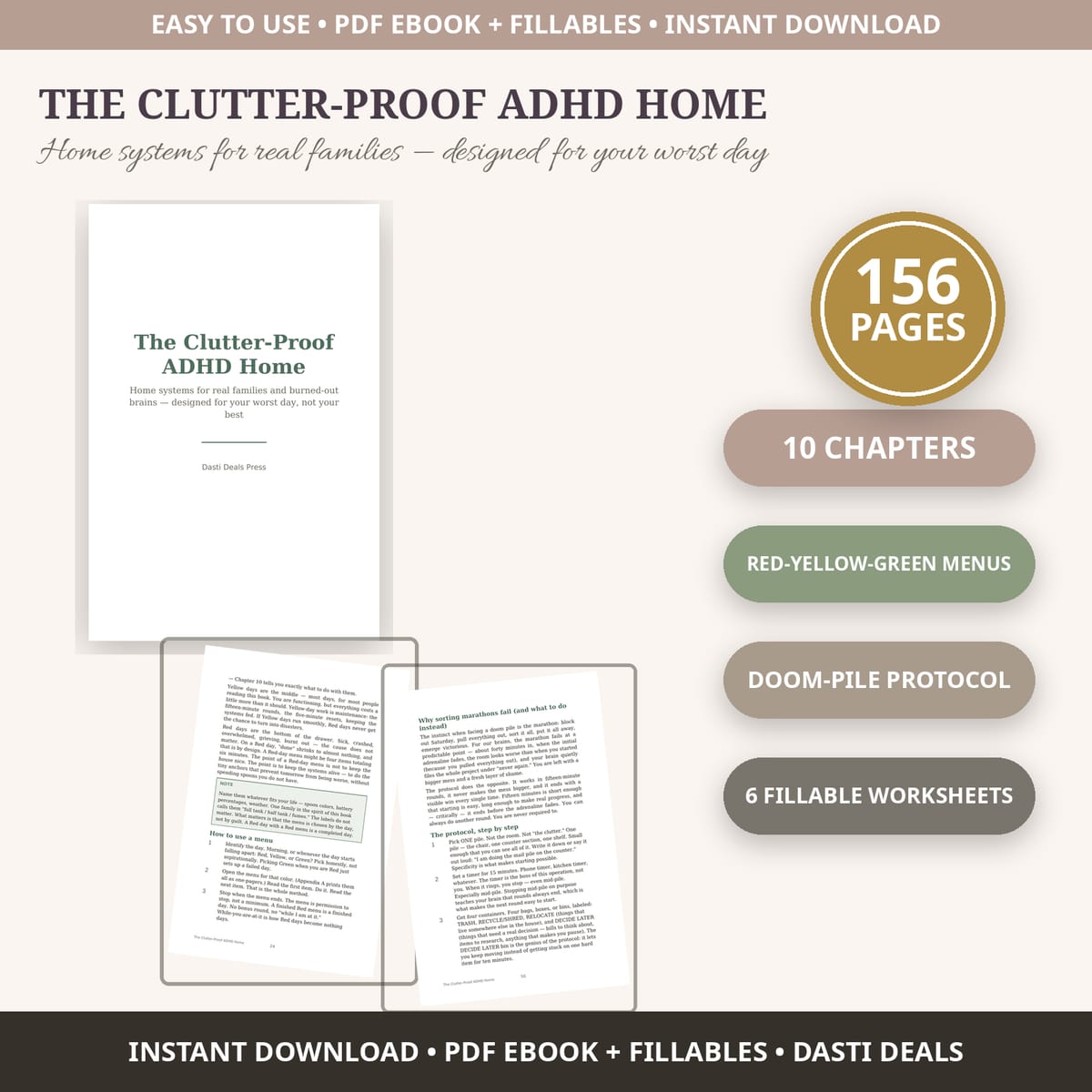
A 156-page playbook written for brains that don't work the way home-organization advice assumes they work: zero-willpower storage, Red/Yellow/Green energy menus for every room, and the doom-pile rescue protocol — every system designed for your worst day, not your best.
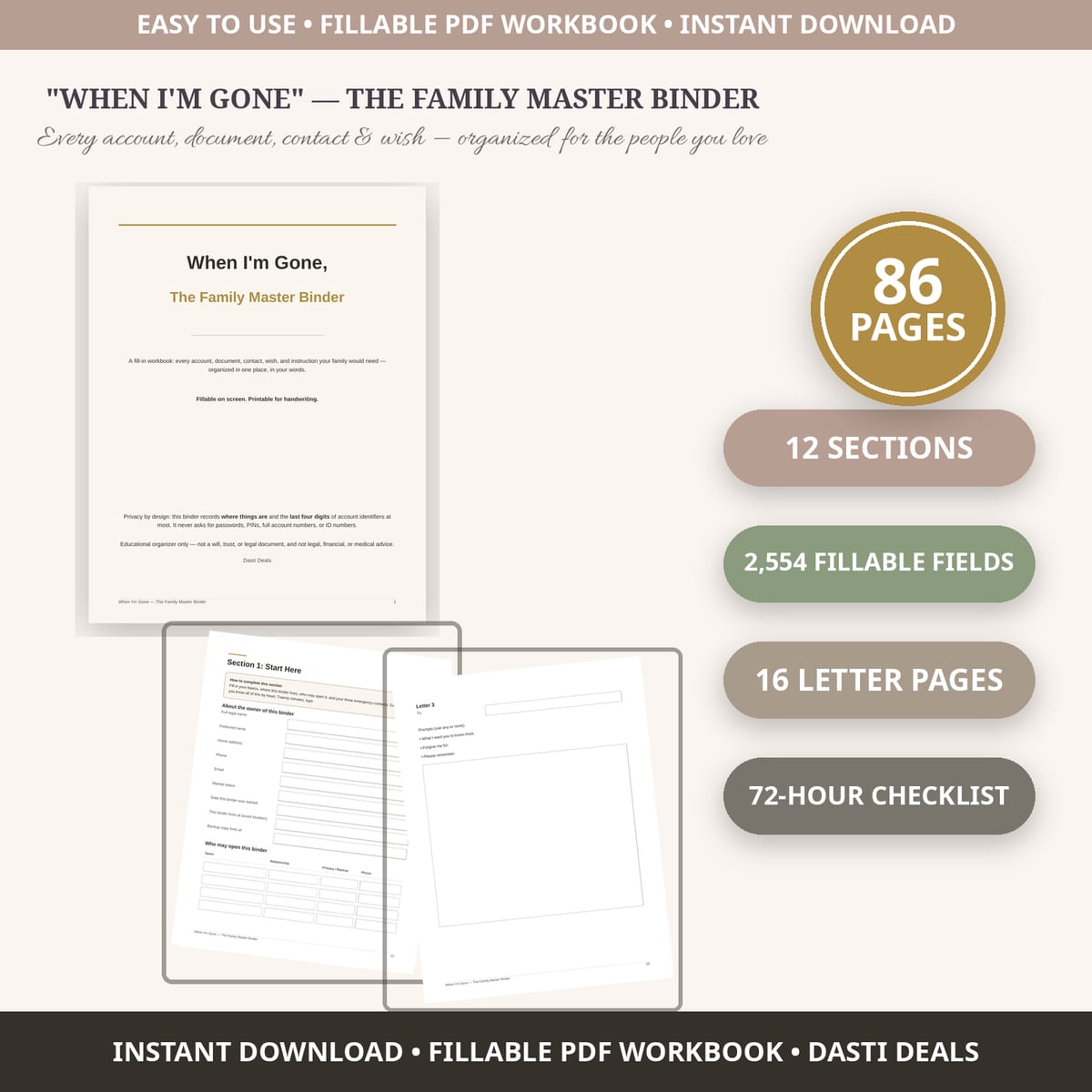
The 86-page fillable workbook that organizes every account, document, contact, wish, and instruction your family would need — in one place, in your words. 2,554 fillable fields across 12 sections, with privacy by design: locations and last four digits only, never passwords.
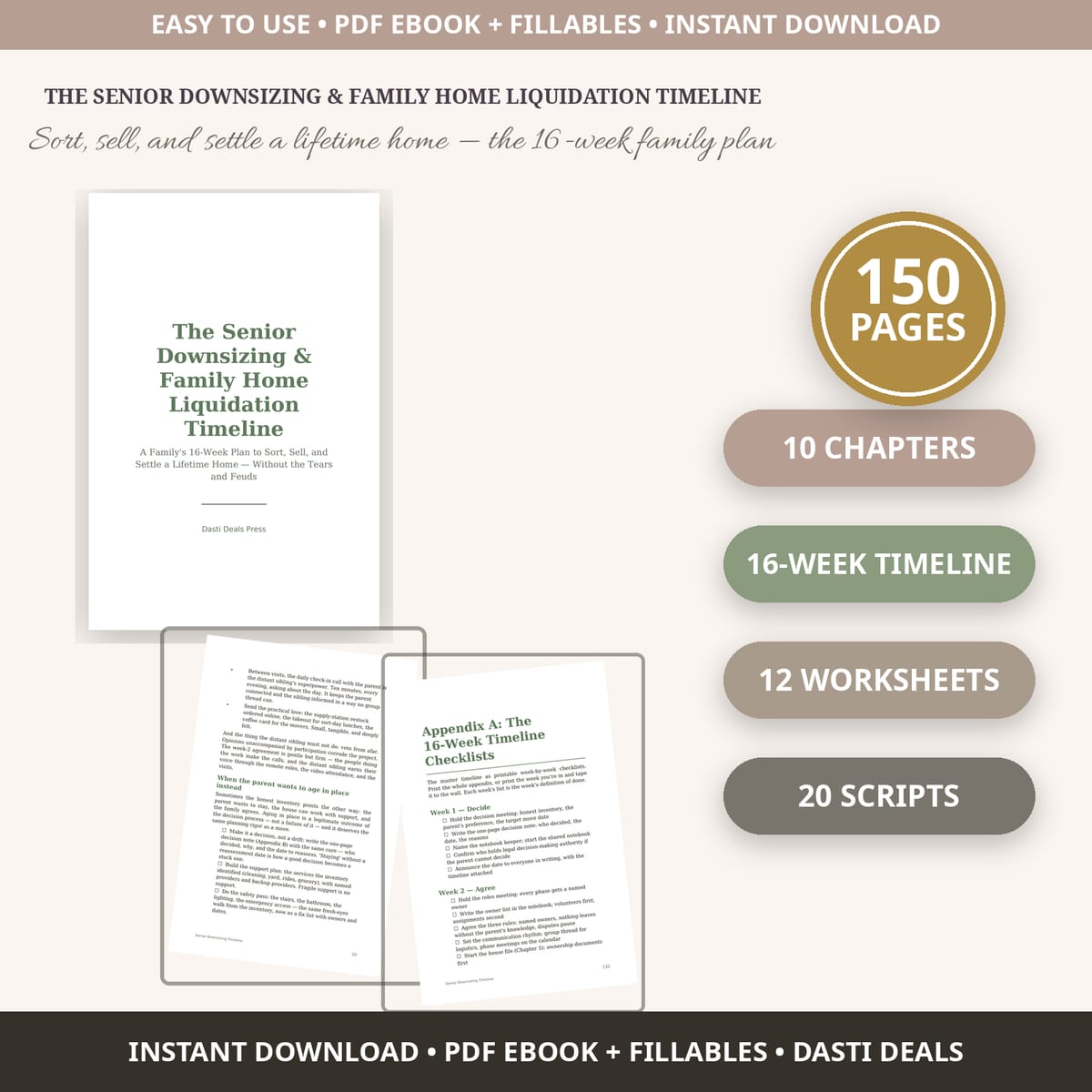
The 150-page handbook that treats the move like the project it is: a sixteen-week, phase-by-phase operation with milestones, named owners, week-by-week checklists, and words for the hard conversations — plus printable worksheets, a 20-script library, and fillable companions.