One phone call changes everything: a fall, a diagnosis, a neighbor's worried message, a parent who suddenly can't manage alone. This 204-page playbook turns that panic into a plan — a complete, week-by-week eldercare checklist system that carries your family from crisis through the first 90 days and beyond.
WHAT YOU GET (instant download, 4 files)
The Aging Parents Crisis Playbook (PDF, 204 pages, 10 chapters) — the complete system, readable on any device or printed at home.
Eldercare Checklists Companion (PDF) — 12 printable master checklists as a standalone file, so you can print checklists without printing the whole book.
Eldercare Templates — Fillable (PDF) — 8 one-page templates as fillable forms (55 fields): health snapshot, contacts sheet, medication list, Red Folder inventory, and more. Click, type, print.
README-license.txt — your single-user license and how-to-use guide.
INSIDE THE 10 CHAPTERS
The Wake-Up Call — recognizing the crisis point; the first-72-hours action list.
The Red Folder Emergency System — the grab-and-go folder: exact contents, built in one afternoon, with copies where they matter.
The Family Conversation — opening the talk with parents; sibling alignment; word-for-word scripts for driving, money, moving, and help at home.
The Care Team Map — doctors, pharmacy, insurance; a one-page health snapshot.
Money & Paperwork Audit — finding accounts and bills; bill-pay takeover; spotting financial exploitation red flags.
Legal Documents — wills, powers of attorney, advance directives, HIPAA releases: what each is, and the questions to ask an attorney.
Home Safety & Living Options — room-by-room safety sweep; comparing care options; facility tour question lists.
Hospital & Discharge Protocol — advocating during a stay; the discharge-day checklist; the first week home.
The 90-Day Action Plan — the core system: weeks 1–13, phased checklists with owners, plus day-30/60/90 reviews.
Caring for the Caregiver — burnout warning signs, respite, dividing the labor. Plus: Appendix A (12 printable checklists), Appendix B (8 templates), Appendix C (88-term glossary).
WHO THIS IS FOR
Adult children and family caregivers facing a parent's sudden health crisis or slow decline — whether it happened yesterday or you're planning ahead.
IMPORTANT — PLEASE READ BEFORE BUYING
This book is educational information, not professional advice. It is NOT legal advice, medical advice, or financial advice. Eldercare, estate, and health-care rules differ by location, and the systems named in this book are US ones — readers elsewhere should adapt with local professionals. Always consult qualified local professionals (an elder-law attorney, your parent's clinicians, a financial professional) for advice about your specific situation. If you suspect abuse, neglect, or a medical emergency, contact local emergency services or the appropriate local authorities promptly.
FORMAT & LICENSE
PDF files. Single-user license: use for your own family's planning and share printed checklists within your immediate caregiving circle. No resale or redistribution.
What's included
The Aging Parents Crisis Playbook (PDF, 204 pages, 10 chapters) — the complete system, readable on any device or printed at home:
1. The Wake-Up Call — recognizing the crisis point; the first-72-hours action list
2. The Red Folder Emergency System — the grab-and-go folder: exact contents, built in one afternoon, with copies where they matter
3. The Family Conversation — opening the talk with parents; sibling alignment; word-for-word scripts for driving, money, moving, and help at home
4. The Care Team Map — doctors, pharmacy, insurance; a one-page health snapshot
5. Money & Paperwork Audit — finding accounts and bills; bill-pay takeover; spotting financial exploitation red flags
6. Legal Documents — wills, powers of attorney, advance directives, HIPAA releases: what each is, and the questions to ask an attorney
7. Home Safety & Living Options — room-by-room safety sweep; comparing care options; facility tour question lists
8. Hospital & Discharge Protocol — advocating during a stay; the discharge-day checklist; the first week home
9. The 90-Day Action Plan — the core system: weeks 1–13, phased checklists with owners, plus day-30/60/90 reviews
10. Caring for the Caregiver — burnout warning signs, respite, dividing the labor
Plus: Appendix A (12 printable checklists), Appendix B (8 templates), Appendix C (88-term glossary)
Eldercare Checklists Companion (PDF) — 12 printable master checklists as a standalone file, so you can print checklists without printing the whole book
Eldercare Templates — Fillable (PDF) — 8 one-page templates as fillable forms (55 fields): health snapshot, contacts sheet, medication list, Red Folder inventory, and more. Click, type, print
README-license.txt — your single-user license and how-to-use guide
Key features
First-72-hours action list → what to do first when the call comes
The Red Folder Emergency System → the grab-and-go folder, built in one afternoon, with copies where they matter
Word-for-word scripts → for the driving, money, moving, and help-at-home conversations with parents, plus sibling alignment
Money & Paperwork Audit → finding accounts and bills, bill-pay takeover, and financial exploitation red flags
Legal Documents chapter → wills, powers of attorney, advance directives, HIPAA releases — what each is, and the questions to ask an attorney
Hospital & Discharge Protocol → advocating during a stay, the discharge-day checklist, and the first week home
The 90-Day Action Plan → weeks 1–13, phased checklists with owners, plus day-30/60/90 reviews
12 printable master checklists → also as a standalone companion PDF, so you never print the whole book to get one checklist
8 fillable templates (55 fields) → health snapshot, contacts sheet, medication list, Red Folder inventory, and more — click, type, print
88-term glossary → the eldercare vocabulary, in plain language (Appendix C)
QA-verified → 204 pages and 10/10 chapters verified by extraction; TOC page numbers verified against actual section starts
Frequently asked questions
Is this legal, medical, or financial advice?
No — this book is educational information, not professional advice. It is NOT legal advice, medical advice, or financial advice.
The systems are US-based — what if I'm elsewhere?
Eldercare, estate, and health-care rules differ by location, and the systems named in this book are US ones — readers elsewhere should adapt with local professionals.
Who should I consult for my family's situation?
Always consult qualified local professionals — an elder-law attorney, your parent's clinicians, a financial professional — for advice about your specific situation.
What if I suspect abuse, neglect, or a medical emergency?
Contact local emergency services or the appropriate local authorities promptly.
Can I share the checklists with my siblings?
The single-user license covers your own family's planning, and you may share printed checklists within your immediate caregiving circle. No resale or redistribution.
How is the book organized?
10 chapters plus three appendices: 12 printable checklists, 8 templates, and an 88-term glossary. The core system is the 90-Day Action Plan (weeks 1–13 with day-30/60/90 reviews).
The Aging Parents Crisis Playbook — 90-Day Eldercare Checklist System
One phone call changes everything: a fall, a diagnosis, a parent who suddenly can't manage alone. This 204-page playbook turns that panic into a plan — a complete, week-by-week eldercare checklist system that carries your family from crisis through the first 90 days and beyond.
A 156-page playbook written for brains that don't work the way home-organization advice assumes they work: zero-willpower storage, Red/Yellow/Green energy menus for every room, and the doom-pile rescue protocol — every system designed for your worst day, not your best.
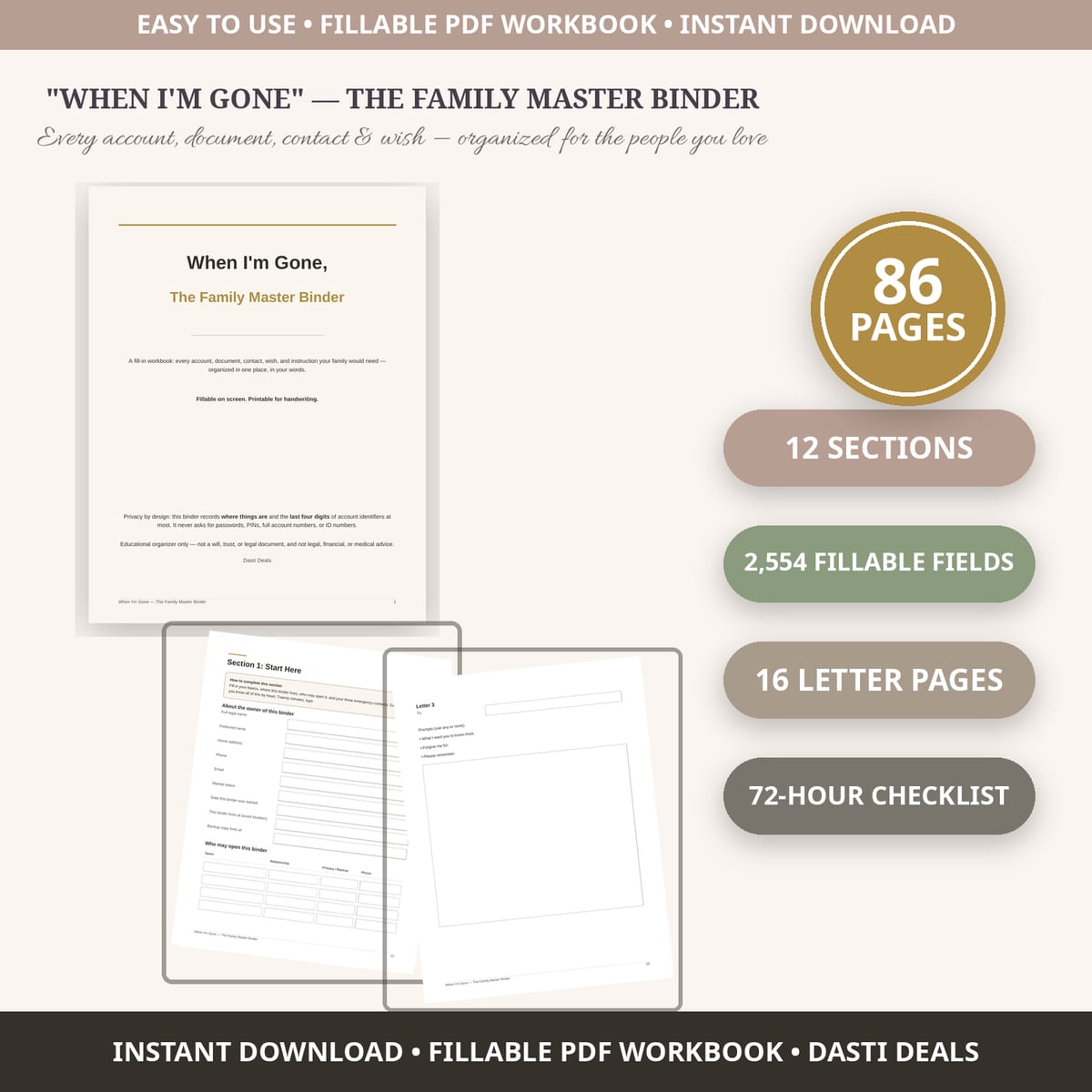
The 86-page fillable workbook that organizes every account, document, contact, wish, and instruction your family would need — in one place, in your words. 2,554 fillable fields across 12 sections, with privacy by design: locations and last four digits only, never passwords.
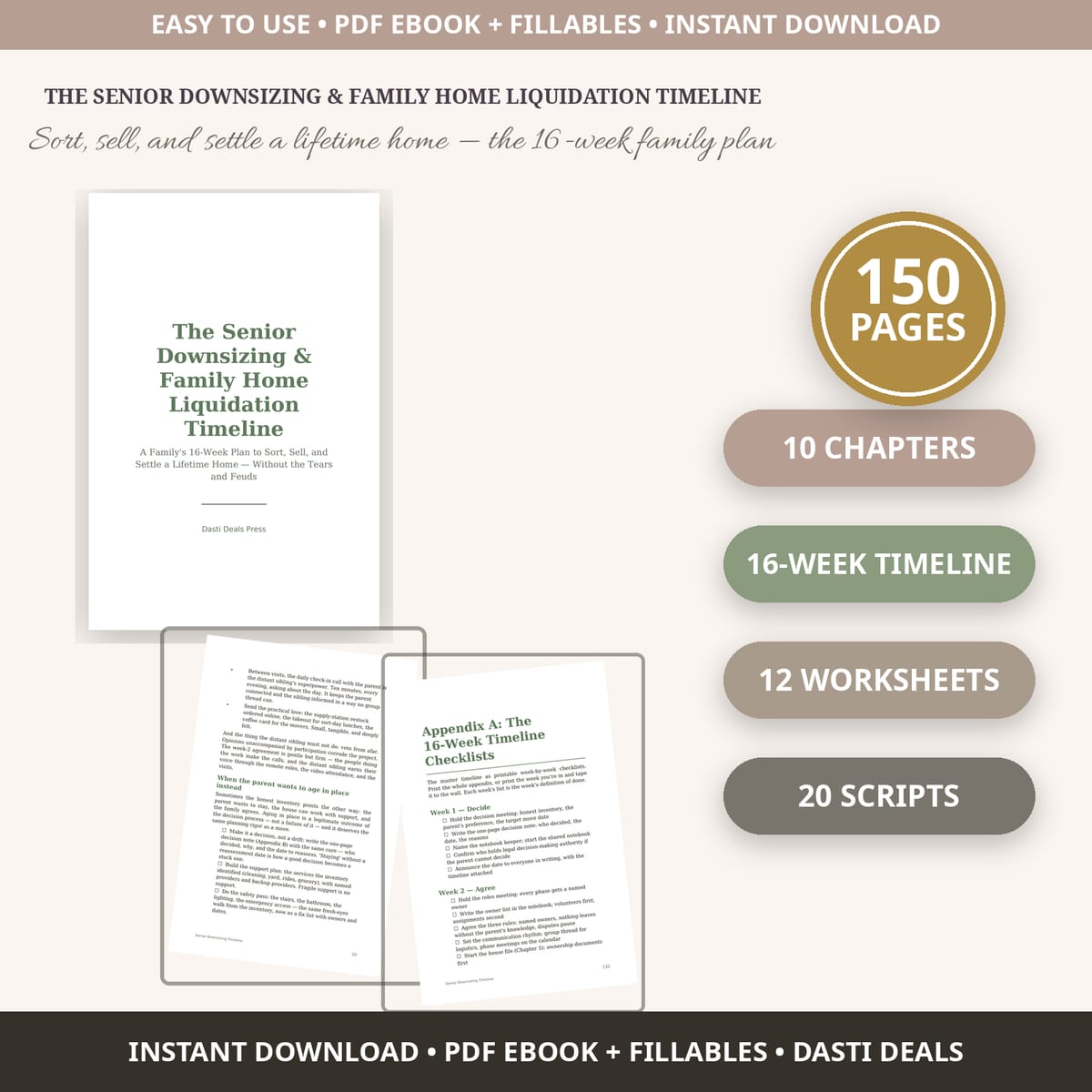
The 150-page handbook that treats the move like the project it is: a sixteen-week, phase-by-phase operation with milestones, named owners, week-by-week checklists, and words for the hard conversations — plus printable worksheets, a 20-script library, and fillable companions.
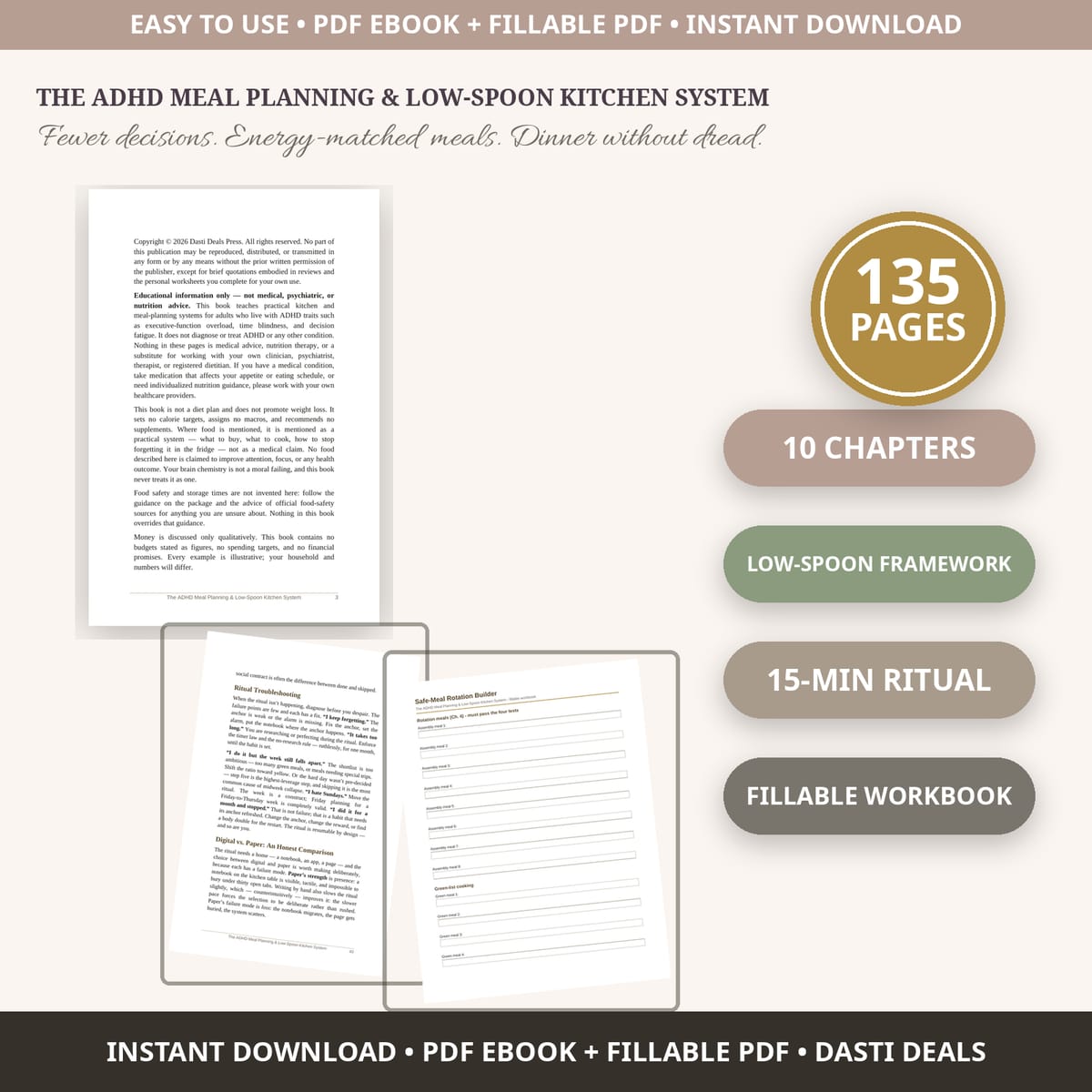
A 135-page kitchen operating system built around how ADHD brains really work — variable energy, expensive decisions, time blindness, and sensory intensity. Three gears (GREEN, YELLOW, RED) match the meal to the moment, with an 11-page fillable workbook. Not a diet plan. Not a cookbook of fussy recipes.